
Jushua Lawrence
Contents
Contesto familiare
Padre inglese, madre italiana, entrambi lavoratori in Italia; la casa del padre a Piacenza era vicina a quella della famiglia Inzaghi. Dopo essendosi trasferito all'età di 6 anni, Joshua è diventato vicino di casa di PippoPadre inglese, madre italiana, entrambi lavoratori in Italia; la casa del padre a Piacenza era vicina a quella della famiglia Inzaghi. Dopo essendosi trasferito all'età di 6 anni, Joshua è diventato vicino di casa di Pippo.
English father, Italian mother, both working in Italy; the father's house in Piacenza was close to that of the Inzaghi family. After moving there at the age of 6, Joshua became a neighbor of PippoEnglish father, Italian mother, both working in Italy; the father's house in Piacenza was close to that of the Inzaghi family. After moving there at the age of 6, Joshua became a neighbor of Pippo.
Aspetto
Prima di passare dal centrocampo all'attacco, era un bambino dai bei capelli a caschetto; dopo essere diventato attaccante, si è fatto i capelli ricci.
Before moving from midfield to the attack, he was a boy with a nice bob haircut; after becoming a forward, he got curly hair.


Carriera
Early life
Joshua Lawrence was born on 25 December 1976 in Milan, Italy, to an English father and an Italian mother. He grew up in Milan and was introduced to football at an early age.
In 1988, at the age of 12, Lawrence moved with his father to Piacenza, where they became neighbours of the Inzaghi family.
He became a childhood friend of Simone Inzaghi and frequently accompanied Filippo Inzaghi to football training.
In 1989, Lawrence joined the youth academy of Piacenza. Primarily deployed as an attacking midfielder, he quickly distinguished himself through his passing, movement and ability to read the game. Over time, he developed from a conventional attacking midfielder into a more versatile attacking player capable of both creating and finishing chances.
In 1993, at the age of 16, Lawrence began training with Piacenza's senior squad. The coaching staff subsequently experimented with him as an attacking midfielder, second striker and wide midfielder in an effort to make the most of his technical ability and tactical awareness.
Professional career
Piacenza
Lawrence was promoted to Piacenza's first team in 1994 at the age of 17.
On 21 August, Piacenza faced Parma in the Coppa Italia, with Lawrence coming on in the 72nd minute to make his professional debut. On 16 October, he made his Serie B debut as a substitute against Pescara in the seventh round of the league.
During the 1994–95 season, Lawrence gradually adapted to senior football, making 18 appearances in all competitions and recording two goals and four assists.
In the summer of 1995, Lawrence transferred to Serie B club Venezia.
Venezia
At Venezia, Lawrence gradually established himself as one of the team's principal attacking playmakers. During the 1995–96 season, he made 29 appearances in all competitions, scoring six goals and providing eight assists.
In the 1996–97 season, Lawrence was increasingly used on the left side and as an attacking midfielder. On 16 February 1997, he scored twice and provided an assist as Venezia defeated Genoa 4–2 in Serie B. He finished the season with 34 appearances, 11 goals and 10 assists.
The 1997–98 season marked a major breakthrough in Lawrence's career. In May 1998, Venezia secured promotion to Serie A, with Lawrence playing a key role in the campaign. He made 35 league appearances, scoring 15 goals and providing 12 assists, as Venezia won the Serie B title.
On 30 August 1998, Lawrence made his Serie A debut, starting against Lazio on the opening matchday of the season. On 25 October, he scored his first Serie A goal against Fiorentina.
During the 1998–99 season, Lawrence made 32 Serie A appearances, scoring nine goals and providing 11 assists. His performances attracted interest from several Serie A clubs.
AC Milan
In July 1999, Lawrence joined AC Milan.
He made his competitive debut for Milan on 29 August, starting against Bologna on the opening matchday of Serie A. On 19 September, he scored his first goal for the club against Perugia.
During the 1999–2000 season, Lawrence quickly became an important member of Milan's attack. He made 31 Serie A appearances, scoring 16 goals and providing 10 assists, as Milan won the Serie A title.
The 2000–01 season was disrupted by injury. In December 2000, Lawrence fell down a staircase while moving furniture at his home in Milan, suffering a severe sprain to his right ankle. He was sidelined for approximately one month. Although he returned to action, the injury affected his acceleration and contributed to a reduction in his number of starts. He finished the season with 27 appearances in all competitions, scoring eight goals and providing nine assists.
In the 2001–02 season, injuries to several of Milan's attacking players, including Andriy Shevchenko and Filippo Inzaghi, gave Lawrence a more prominent role in the starting XI. Used primarily as an attacking midfielder or second striker in Milan's Christmas Tree formation, he became one of the team's main creative outlets.
On 28 April 2002, Lawrence provided an assist in the Coppa Italia final as Milan won the trophy. He finished the 2001–02 season with 43 appearances in all competitions, scoring 25 goals and providing 15 assists.
During the 2002–03 season, Lawrence continued to be affected by his recurring right-ankle injury and began placing greater emphasis on developing his weaker left foot. As his ability with both feet improved, he became increasingly versatile in central areas, particularly in his passing and finishing.
On 28 May 2003, Milan faced Juventus in the UEFA Champions League final. The match ended in a penalty shoot-out, with Milan ultimately lifting the trophy. Lawrence made 48 appearances in all competitions during the season, scoring 22 goals and providing 17 assists, as Milan completed a domestic and European treble by winning Serie A, the Coppa Italia and the UEFA Champions League.
Following Kaká'sFollowing Kaká's arrival in the 2003–04 season, Lawrence gradually moved towards the left side of the attack, alternating between left winger and attacking midfielder. He also increasingly used his left foot to deliver outside-of-the-foot passes.
In May 2004, Milan won the Serie A title. Later that month, the club was defeated by Monaco in the UEFA Champions League final, with Lawrence providing an assist. He made 46 appearances in all competitions during the season, scoring 22 goals, including 10 in the Champions League.
Lawrence remained a key attacking player during the 2004–05 season. In April 2005, during Milan's Champions League quarter-final against Inter Milan, fireworks launched from outside the stadium struck the area near his right ear. Medical examinations revealed damage to the ossicles of the ear, accompanied by some impairment of his vestibular function. Following treatment, he returned to action and completed the season.
On 25 May 2005, Milan faced Liverpool in the Champions League final. Milan established a lead before Liverpool drew level, and the match was eventually decided by a penalty shoot-out, which Milan won. Lawrence finished the 2004–05 season with 42 appearances in all competitions, scoring 18 goals and providing 14 assists.
During the 2005–06 season, Lawrence was pushed further forward and increasingly operated as a striker. On 19 March 2006, he scored a hat-trick against Udinese in Serie A. In May, he helped Milan win another Champions League title. He finished the season with 44 appearances in all competitions, scoring 27 goals and providing 13 assists.
In June 2006, Lawrence was selected for Italy's squad for the 2006 FIFA World Cup in Germany. On 9 July, Italy defeated France on penalties in the final, making Lawrence a World Cup winner. Following the tournament, he suffered a serious injury to his right knee and underwent an extended rehabilitation programme. He subsequently finished second in the 2006 Ballon d'Or voting.
The 2006–07 season was heavily affected by his knee injury, limiting his appearances. Nevertheless, Lawrence remained part of the Milan side that won the UEFA Champions League.
Lawrence returned to full form during the 2007–08 season. On 21 October, he scored a hat-trick against Empoli in Serie A. He finished the campaign with 34 league appearances, 25 goals and 11 assists.
The 2008–09 season represented the final statistical peak of Lawrence's career. In May 2009, he scored 20 league goals as Milan won the Serie A title. He also scored 12 goals in the Champions League, although Milan ultimately finished as runners-up. At the end of the season, Lawrence won the Ballon d'Or.
During the 2009–10 season, Lawrence was involved in transfer negotiations but ultimately remained at Milan. As the team's tactical system evolved, he moved from the left wing into a more central attacking-midfield role and formed an attacking partnership with Ronaldinho. He made 39 appearances in all competitions, scoring 14 goals and providing 16 assists.
In the 2010–11 season, Lawrence moved further into central midfield and assumed greater responsibility for orchestrating attacks. In May 2011, Milan secured the Serie A title, with Lawrence winning another league championship. He made 36 appearances in all competitions, scoring 11 goals and providing 17 assists.
Following Andrea Pirlo's departure in the 2011–12 season, Lawrence became one of Milan's principal midfield organisers. On 29 April, he provided the winning assist against Siena. He finished the season with 38 appearances in all competitions, scoring nine goals and providing 18 assists as Milan won another Serie A title.
In the 2012–13 season, following Zlatan Ibrahimović's departure, Lawrence was moved further forward and Milan increasingly relied on his creativity in the final third. He scored 12 goals in the Champions League, while Milan ultimately finished as runners-up. Lawrence finished second in the Ballon d'Or voting at the end of the season.
The 2013–14 season was marked by tactical disagreements between Lawrence and head coach Massimiliano Allegri, which resulted in him temporarily losing his place in the starting XI. After Allegri left the club in January 2014, Clarence Seedorf took charge and Lawrence regained a regular role, operating between the forward line and midfield.
In the 2014–15 season, Filippo Inzaghi was appointed Milan manager, bringing Lawrence and his former childhood acquaintance together as player and coach. With age and recurring injuries increasingly limiting his playing time, Lawrence made fewer appearances. At the end of the season, he held a farewell ceremony at San Siro and announced his retirement.
Comeback and retirement
In the summer of 2015, following an invitation from Milan's management and club president Silvio Berlusconi, Lawrence returned to the squad for the 2015–16 season.
On 20 September, Milan faced Palermo in Serie A. At the age of 39, Lawrence came on in the 79th minute, marking his return to competitive football.
On 13 March 2016, Milan faced Chievo. Lawrence entered the match in the 76th minute and scored the winning goal in the closing stages.
On 15 May, Milan won their final Serie A match of the season. Lawrence came on in the 81st minute and provided a decisive assist, helping the club secure qualification for the following season's UEFA Champions League.
On 15 May 2016, at the age of 39, Joshua Lawrence officially ended his professional football career.
早年经历
1976年12月25日,约书亚·劳伦斯(Joshua Lawrence)出生于意大利米兰。父亲为英国人,母亲为意大利人。约书亚自幼生活在米兰,并在家庭环境中接触足球。
1988年,12岁的约书亚随父亲迁居皮亚琴察,与因扎吉一家成为邻居。此后,他与西莫内·因扎吉成为儿时好友,也经常跟随菲利波·因扎吉参加足球训练。
1989年,约书亚进入皮亚琴察足球俱乐部青训体系,主要司职前腰。由于传球、跑位和比赛阅读能力突出,他逐渐从单纯的攻击型中场转变为能够参与组织和终结进攻的前场球员。
1993年,16岁的约书亚开始跟随皮亚琴察一线队训练。教练组随后尝试让他在前腰、影锋和边前卫等位置之间转换,以发挥其技术和比赛阅读能力。
职业生涯
皮亚琴察时期
1994年,17岁的约书亚升入皮亚琴察一线队。
8月21日,皮亚琴察在意大利杯比赛中对阵帕尔马,约书亚于第72分钟替补出场,完成职业生涯首秀。10月16日,他又在意乙联赛第7轮对阵佩斯卡拉的比赛中替补登场,完成职业联赛首秀。
1994-95赛季,约书亚逐渐适应成年足球,代表皮亚琴察在各项赛事中出场18次,打进2球并贡献4次助攻。
1995年夏天,约书亚转会至意乙威尼斯足球俱乐部。
威尼斯时期
加盟威尼斯后,约书亚逐渐成为球队主要的进攻组织者。1995-96赛季,他代表球队在各项赛事中出场29次,打进6球并贡献8次助攻。
1996-97赛季,约书亚开始更多出现在左路和前腰位置。1997年2月16日,威尼斯在意乙联赛中4比2战胜热那亚,约书亚单场打进2球并送出1次助攻。该赛季,他代表球队出场34次,打进11球并贡献10次助攻。
1997-98赛季,约书亚迎来职业生涯的重要突破。1998年5月,威尼斯锁定意乙升级资格,约书亚以35次联赛出场、15粒进球和12次助攻成为球队升级的重要成员,并随队夺得意乙联赛冠军。
1998年8月30日,威尼斯在意甲首轮对阵拉齐奥,约书亚首发出场,完成个人意甲首秀。10月25日,他在对阵佛罗伦萨的比赛中打进意甲首球。
1998-99赛季,约书亚代表威尼斯在意甲联赛中出场32次,打进9球并贡献11次助攻。赛季结束后,他受到多家意甲俱乐部关注。
AC米兰时期
1999年7月,约书亚转会加盟AC米兰。
8月29日,AC米兰在意甲首轮对阵博洛尼亚,约书亚完成加盟后的正式比赛首秀;9月19日,他在对阵佩鲁贾的比赛中打进米兰生涯首球。
1999-00赛季,约书亚迅速成为球队重要进攻球员。整个赛季,他在意甲出场31次,打进16球并贡献10次助攻,帮助AC米兰夺得意甲联赛冠军。
2000-01赛季,约书亚的比赛时间受到伤病影响。2000年12月,他在米兰住所搬运家具时从楼梯上摔落,造成右脚踝严重扭伤,休战约一个月。伤愈后,他的启动速度受到一定影响,首发次数随之减少。该赛季,他各项赛事出场27次,打进8球并贡献9次助攻。
2001-02赛季,随着舍甫琴科、因扎吉等锋线球员先后受到伤病影响,约书亚重新成为球队重要首发球员,并在圣诞树阵型中承担前腰和第二前锋职责。
2002年4月28日,AC米兰在意大利杯决赛中击败对手,约书亚贡献1次助攻,帮助球队夺得意大利杯冠军。2001-02赛季,他各项赛事出场43次,打进25球并贡献15次助攻。
2002-03赛季,约书亚受到右脚踝旧伤困扰,并开始加强左脚训练。随着双脚技术逐渐成熟,他在中路的传球和射门选择更加丰富。
2003年5月28日,AC米兰在欧洲冠军联赛决赛中对阵尤文图斯,双方经过点球大战决出胜负,AC米兰最终夺冠。该赛季约书亚各项赛事出场48次,打进22球并贡献17次助攻,随队夺得意甲、意大利杯和欧洲冠军联赛冠军。
2003-04赛季,卡卡加盟后,约书亚的位置逐渐向左路移动,在左边锋、前腰之间频繁换位,并开始大量使用左脚外脚背完成传球。
2004年5月,AC米兰夺得意甲联赛冠军;同月,球队在欧洲冠军联赛决赛中惜败摩纳哥,约书亚贡献1次助攻。该赛季他各项赛事出场46次,打进22球,其中欧洲冠军联赛进球10粒。
2004-05赛季,约书亚继续担任球队主要进攻球员。2005年4月,AC米兰与国际米兰进行欧洲冠军联赛四分之一决赛期间,场外烟火造成约书亚右耳附近受到冲击。检查显示其听小骨受损,并伴随一定程度的前庭功能影响。经过治疗后,他继续完成赛季。
2005年5月25日,AC米兰在欧洲冠军联赛决赛中对阵利物浦。球队在比赛中一度取得领先,随后被对手追平,最终通过点球大战夺冠。2004-05赛季,约书亚各项赛事出场42次,打进18球并贡献14次助攻。
2005-06赛季,约书亚进一步向锋线移动。2006年3月19日,AC米兰在意甲联赛中对阵乌迪内斯,约书亚完成帽子戏法;5月,他随队再次夺得欧洲冠军联赛冠军。该赛季,他各项赛事出场44次,打进27球并贡献13次助攻。
2006年6月,约书亚入选意大利国家队参加德国世界杯。7月9日,意大利在决赛中通过点球大战击败法国,约书亚随队获得世界杯冠军。世界杯结束后,他遭遇严重右膝伤病,随后长期接受恢复治疗,并在当年的金球奖评选中获得第二名。
2006-07赛季,伤病使约书亚的出场时间明显减少,但他仍随AC米兰夺得欧洲冠军联赛冠军。
2007-08赛季,约书亚恢复状态。10月21日,他在对阵恩波利的意甲比赛中上演帽子戏法。该赛季,他在意甲出场34次,打进25球并贡献11次助攻。
2008-09赛季,约书亚迎来个人职业生涯最后一个数据高峰。2009年5月,他以20粒联赛进球帮助AC米兰夺得意甲冠军,同时在欧洲冠军联赛中打进12球,球队最终获得亚军。赛季结束后,约书亚获得2009年金球奖。
2009-10赛季,约书亚再次经历转会问题,但最终选择留在AC米兰。随着球队战术调整,他由左边锋逐渐向前腰和攻击型中场移动,并与罗纳尔迪尼奥形成前场配合。该赛季,他各项赛事出场39次,打进14球并贡献16次助攻。
2010-11赛季,约书亚进一步回撤至中路,开始承担更多组织进攻任务。2011年5月,AC米兰锁定意甲冠军,约书亚随队夺冠。该赛季他各项赛事出场36次,打进11球并贡献17次助攻。
2011-12赛季,皮尔洛离开AC米兰后,约书亚成为球队中场组织的重要球员。4月29日对阵锡耶纳的比赛中,他送出制胜助攻。该赛季约书亚各项赛事出场38次,打进9球并贡献18次助攻,帮助AC米兰再次夺得意甲冠军。
2012-13赛季,伊布拉希莫维奇离队后,约书亚的位置重新向前移动,球队更多利用其前场创造力。该赛季,他在欧洲冠军联赛中攻入12球,AC米兰最终获得亚军;约书亚在赛季末金球奖评选中排名第二。
2013-14赛季,约书亚与主教练阿莱格里在战术安排上产生严重分歧,并一度失去首发位置。2014年1月阿莱格里离任后,西多夫接任主教练,约书亚重新获得稳定出场机会,并在前锋与中场之间承担重要职责。
2014-15赛季,菲利波·因扎吉出任AC米兰主教练,约书亚与因扎吉再次成为球员与教练。由于年龄和伤病影响,约书亚的出场时间进一步减少。赛季结束后,他在圣西罗举行告别仪式,宣布退役。
复出
2015年夏天,在AC米兰俱乐部管理层及贝卢斯科尼邀请下,约书亚重新回到球队,参加2015-16赛季。
9月20日,AC米兰在意甲联赛中对阵巴勒莫,39岁的约书亚于第79分钟替补出场,完成复出后的正式比赛首秀。
2016年3月13日,AC米兰对阵切沃,约书亚第76分钟替补出场,并在比赛最后阶段打进制胜球。
5月15日,AC米兰在意甲联赛最后一轮取胜,约书亚第81分钟替补出场并送出关键助攻,帮助球队获得下一赛季欧洲冠军联赛参赛资格。
2016年5月15日,39岁的约书亚·劳伦斯正式结束职业足球生涯。


Player Technical Profile
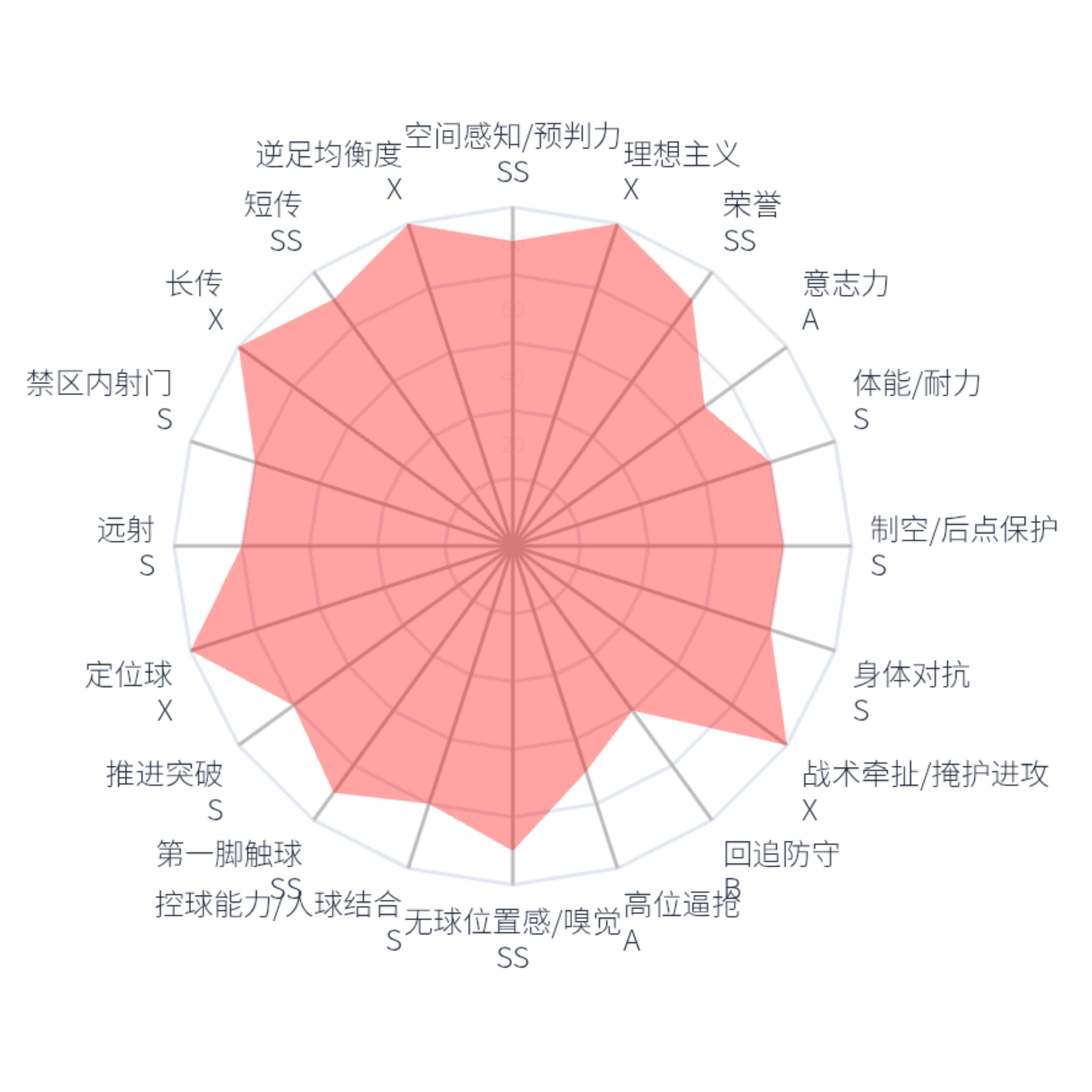
Weak-Foot Ability (5/5 Both Feet): Exceptionally balanced with both feet. Requires no setup touch onto a preferred foot from any area or angle on the pitch, capable of executing high-quality cross-regional passes or direct finishes at a moment’s notice.
Elite Long Passing & Set-Pieces: Possesses top-tier long-range switching and dead-ball delivery. Outstanding capacity for wide diagonal balls and pinpoint switches play, seamlessly opening up both flanks and tearing through compact defensive lines.
Positional Evolution & Versatility: Career/tactical profile spans across Playmaker (Advanced/Central), Forward/Striker, Winger, and Defensive Midfielder. Operating in the final third, he generates a steady output of goals through all-angle attacking threats and crosses; once dropping into a deeper role, he dictates the overall tempo of play with his superior tactical vision.
Exceptional Tactical Intelligence & Adaptability: Exhibits elite football IQ and tactical comprehension. Regardless of positional shifts, he rapidly grasps the core responsibilities of any new role and delivers top-level performances consistently.
Career Achievements
Club Honours
- Serie A: 5 titles (1999–00, 2003–04, 2008–09, 2010–11, 2011–12)
- Serie B: 1 title (1997–98)
- Coppa Italia: 2 titles (2001–02, 2002–03)
- UEFA Champions League: 4 titles (2002–03, 2004–05, 2005—06, 2006–07)
International Honours
- FIFA World Cup: 1 title (2006)
Individual Honours
- Ballon d'Or: 1 (2009)
- Ballon d'Or runner-up: 2 (2006, 2012)
Career Honours Summary
- Major club trophies: 13
- FIFA World Cup titles: 1
- Ballon d'Or: 1
- Ballon d'Or runner-up: 2

Intervista
Intervista esclusiva per Sportweek: 20 domande e risposte rapide a Josh Lawrence
[Introduzione / Presentazione del conduttore]
Il numero 25 del Milan, attaccante titolare, campione del mondo 2006, il gentiluomo Lawrence. Josh, hai 3 secondi per pensare, niente riflessioni, rispondi d'istinto. Sei pronto?
J:Pronto.
Centrocampista o attaccante?
J:Attaccante.
Lawrence o Joshua?
J:Chiamami pure Josh.
Qual è il difensore che odi di più affrontare?
J: Nesta (ride), ma sono sicuro che non saremo più avversari.
Dopo la vittoria a Berlino, con chi desideravi di più trascorrere la serata?
J:Con ognuno di loro. (ride)
Se segnassi il gol vittoria allo scadere a San Siro, quale sarebbe la tua esultanza?
J:Abbraccerei ogni singolo compagno di squadra.
Il tuo idolo?
J:Baggio. (ride) A essere sincero, è una delle ragioni per cui mi sono fatto i capelli ricci.
Un'unica parola per descrivere i movimenti di PippoUn'unica parola per descrivere i movimenti di Pippo (Filippo Inzaghi) in area di rigore?
J:Un ballerino.
Violino o chitarra elettrica?
J:Chitarra elettrica.
Se potessi portare solo un disco su un'isola deserta: Queen o Radiohead?
J:Radiohead. E naturalmente la nostra cara Laura: dal vivo è tutta un'altra cosa, la migliore.
Christian Vieri o Shevchenko?
J:Oh mamma mia. (ride) Dico Sheva — Forza Milan!
Pizza o pasta?
J: Pasta, con molto pomodoro.
Ti senti più gatto o più cane di carattere?
J:Gatto? Non vado d'accordo con il cane di Sandro... mio Dio, ho paura dei cani.
Se non giocassi a calcio, quale sarebbe la tua professione oggi?
J: Forse il procuratore sportivo.
Preferisci le giornate uggiose e piovose dell'Inghilterra o il sole dell'Italia?
J:Dimentico sempre l'ombrello. (ride) Il sole dell'Italia.
PippoPippo (Inzaghi) ti porta in discoteca, a che ora inizi di solito a annoiarti?
J:Per niente, mi piace molto chiacchierare con le persone diverse — soprattutto con i tifosi. Comunque sia io che PippoJ:Per niente, mi piace molto chiacchierare con le persone diverse — soprattutto con i tifosi. Comunque sia io che Pippo non beviamo mai alcolici.
Qual è la lettera da parte di un tifoso più curiosa che hai mai ricevuto?
J:Probabilmente una in cui mi si chiedeva di ritornare al mio vecchio taglio di capelli. Ho risposto: «Mai più». (ride)
Tutta la Serie A ti riconosce come la persona più signorile in assoluto, quand'è l'ultima volta che ti sei arrabbiato?
J:Ieri. Andrea ha rubato i biscotti Plasmon di Pippo, ma si è ostinato a dire che l'avevo fatto io, il che ha fatto perdere le staffe a un PippoJ:Ieri. Andrea ha rubato i biscotti Plasmon di Pippo, ma si è ostinato a dire che l'avevo fatto io, il che ha fatto perdere le staffe a un Pippo tesissimo... è stato terribile.
Se dovessi fare un regalo di compleanno a quel tipo della porta accanto che ti ruba sempre il gelato, cosa gli regaleresti?
J:Un paio di scarpette nuove.
Su 365 giorni all'anno, qual è il tuo preferito?
J:Il 25 dicembre.
L'ultima domanda — la tua squadra del cuore?
J:L'AC Milan! Senza ombra di dubbio! (ride) (saluta con la mano)
Sportweek Exclusive: 20 Quick-Fire Questions with Josh Lawrence
[Intro / Host]
"Milan's number 25, starting striker, 2006 World Cup champion, the gentleman Lawrence. Josh, you have 3 seconds to answer, no overthinking, go with your gut—ready?"
"Ready."
"Midfielder" or "Striker"?
Striker.
Lawrence or Joshua?
Just call me Josh.
Who is the defender you least enjoy facing?
Nesta (laughs), but I'm confident we won't be opponents ever again.
After winning in Berlin, who did you most want to spend the night celebrating with?
Everyone. (laughs)
If you scored a buzzer-beater winner at the San Siro, what would your celebration be?
I'd hug every single teammate.
Your idol?
Baggio. (laughs) To be honest, he's one of the reasons I got a perm.
One word to describe Pippo'sOne word to describe Pippo's (Filippo Inzaghi) movement in the penalty box?
A dancer.
Violin or electric guitar?
Electric guitar.
If you could only bring one album to a deserted island: Queen or Radiohead?
Radiohead. And of course, our dear Laura—the real person is always the best.
Christian Vieri or Shevchenko?
Oh gosh. (laughs) Sheva, definitely—Forza Milan!
Pizza or pasta?
Pasta, extra tomato sauce.
Do you think your personality is more like a cat or a dog?
A cat? I don't get along with Sandro's dog... goodness, I'm afraid of dogs.
If you weren't playing football, what would your job be right now?
Maybe a football agent.
Do you prefer rainy English days or Italian sunshine?
I'm always forgetting my umbrella. (laughs) Italian sunshine.
PippoPippo (Inzaghi) takes you out to a club—what time do you usually start getting bored?
Not bored at all, I really enjoy chatting with different people—especially the fans. But neither PippoNot bored at all, I really enjoy chatting with different people—especially the fans. But neither Pippo nor I ever drink alcohol.
What's the most interesting fan letter you've ever received?
Probably one asking me to switch back to my old hairstyle. I wrote back saying, "Never." (laughs)
Everyone in Serie A agrees you're the ultimate gentleman; when was the last time you lost your temper?
Yesterday. Andrea stole Pippo's baby biscuits, but he insisted it was me, which made an already nervous PippoYesterday. Andrea stole Pippo's baby biscuits, but he insisted it was me, which made an already nervous Pippo snap at me... it was awful.
If you had to buy a birthday gift for that guy next door who's always stealing your ice cream, what would you get him?
A new pair of football boots.
Out of 365 days in a year, which one is your favorite?
December 25th.
Final question—favorite club?
AC Milan! Without a doubt! (laughs) (waving goodbye)
Il giudizio degli altri
La caratteristica più importante di Josh è l'affidabilità.
Se lo metti in attacco, segna. Se lo arretri a centrocampo, organizza il gioco. Se la squadra ha bisogno che difenda, non si lamenta.
Un giocatore così è prezioso per qualsiasi allenatore e per qualsiasi club.
Ma credo che la cosa più importante sia che non abbia mai cambiato il suo atteggiamento nei confronti del calcio, indipendentemente dalle circostanze. Qualunque sia la posizione, se gli dai la possibilità di scendere in campo, lui sa giocare.
Josh’s greatest quality is his reliability.
You put him up front, he scores. You move him back into midfield, he organizes the game. If the team needs him to defend, he never complains.
A player like that is incredibly valuable to a coach and to a club.
But I think what matters even more is that he has never changed his attitude towards the game because of his circumstances. Whatever position he plays, if you give him the opportunity to step onto the pitch, he can play.
Josh è una persona molto sensibile.
Molti pensano che la sensibilità significhi fragilità, ma nel calcio non è così.
Quando un giocatore riesce a percepire i compagni, gli spazi, il pubblico e persino le emozioni della partita, può fare una scelta un attimo prima degli altri.
Ma il prezzo da pagare è che finisce sempre per portarsi addosso una pressione maggiore.
Josh is a very sensitive person.
A lot of people think sensitivity means weakness, but it doesn’t work that way in football.
If a player can sense his teammates, the spaces, the crowd, and even the emotions of the game, he can make a decision a moment before everyone else.
But the price he pays is that he always ends up carrying a greater amount of pressure.
Josh aveva già ricevuto il riconoscimento che meritava. Ma quel Pallone d'Oro se lo è meritato fino in fondo.
Josh had already received the recognition he deserved. But he absolutely deserved that Ballon d’Or.
Kaká:
All'inizio, in realtà, riuscivo a percepire l'insicurezza di Josh.
Ma alla fine abbiamo dimostrato di capirci a vicenda, e insieme abbiamo creato tantissimi momenti meravigliosi.
Actually, at first I could sense that Josh was a little uneasy.
But in the end, we proved that we understood each other, and together we created so many wonderful moments.
Josh aveva un problema: era troppo intelligente.
Quando era giovane, a volte pensava di aver già trovato la risposta alla partita. Non gli bastava semplicemente partecipare alla partita; voleva comprenderla, dominarla.
Per molto tempo questo lo ha reso aggressivo. Era convinto che dovesse esistere una sorta di “uomo veramente grande”, qualcuno capace di controllare la partita.
Poi ha imparato ad aspettare.
E soprattutto ha imparato a godersi la partita.
È stato soltanto allora che è diventato davvero un calciatore
Josh had one problem: he was too intelligent.
When he was young, sometimes he thought he had already found the answer to the game. It wasn’t enough for him simply to take part in a match; he wanted to understand it, to control it.
For a long time, that made him aggressive. He believed there had to be some kind of ‘truly great man’—someone capable of controlling the game.
But eventually, he learned to wait.
More importantly, he learned to enjoy the game.
Only after that did he truly become a footballer.
Un gentiluomo? Ma dai, santo cielo! Non è per niente un gentiluomo. E non è nemmeno così buono!
Madonna, sarebbe assurdo quanto dire che Nesta è elegante.
A gentleman? Come on, for God’s sake! He’s not a gentleman at all. And he’s not even that nice!
Good Lord, that’s almost as ridiculous as saying Nesta is elegant.
If I had his left foot and his right foot, I’d tell everyone about it every single day.
Successi oltre il calcio
Dopo il ritiro dal calcio, Joshua non è rimasto coinvolto nel mondo calcistico. Ha invece ripreso in mano la chitarra elettrica che suonava fin dall’età di sedici anni e ha fondato la propria rock band, gli MrsL. Nella band ricopre il ruolo di chitarrista solista e cantante principale, partecipando anche alla composizione dei brani.
La musica degli MrsL è principalmente orientata verso l’alternative rock. All’inizio la band non si distingue per particolari virtuosismi tecnici, e anche le capacità chitarristiche di Joshua sono piuttosto ordinarie. Ciò che possiede, però, è una forte sensibilità per la melodia e per l’emozione. Per lui è più importante che una melodia sia riconoscibile e che una canzone riesca a trasmettere una sensazione precisa, piuttosto che puntare sulla complessità tecnica dell’esecuzione. Per questo, i primi brani degli MrsL possono anche non essere perfetti dal punto di vista tecnico, ma possiedono una propria identità melodica. Con l’evolversi della scrittura, la band raggiunge gradualmente una maggiore maturità nella fase successiva.
Un'altra caratteristica importante degli MrsL è la loro estetica ambigua e libera.
La band non ricerca deliberatamente la femminilità, né considera l’estetica androgina come un’identità fissa. Gonne, pantaloni, completi, gioielli e trucco sono semplicemente forme di espressione personale e non devono necessariamente corrispondere a una determinata immagine di genere. Questo aspetto è particolarmente evidente in Joshua: il suo aspetto sul palco può cambiare da un’esibizione all’altra, senza che debba dimostrare di appartenere a una determinata categoria.
Lo stesso atteggiamento si riflette nella musica. I testi degli MrsL raramente vengono costruiti intorno a una precisa “narrazione maschile” o “narrazione femminile”. Si concentrano piuttosto sulla solitudine, sulla libertà, sull’attaccamento, sull’amore e sulle relazioni tra le persone. La band non cerca di creare deliberatamente uno stile “senza genere”; cerca piuttosto di lasciare il minor numero possibile di vincoli al modo in cui una persona può esprimersi.
Anche le capacità linguistiche di Joshua costituiscono una parte importante delle basi degli MrsL.
Poiché ha vissuto a lungo in Italia e possiede un italiano eccellente, molte persone tendono a sottovalutare il suo inglese. In realtà, Joshua parla inglese altrettanto bene ed è perfettamente in grado di utilizzarlo in modo naturale anche nella scrittura musicale. La maggior parte dei brani degli MrsL è scritta e cantata in inglese.
Non si tratta di una scelta fatta per costruire deliberatamente un’immagine internazionale. L’inglese è semplicemente una lingua che Joshua sa utilizzare con naturalezza quando scrive musica. Rispetto all’italiano, i brani in inglese incontrano inoltre meno barriere linguistiche quando raggiungono ascoltatori provenienti da contesti diversi, dando agli MrsL una base naturale per andare oltre l’Italia fin dall’inizio.
Gli MrsL sviluppano così gradualmente alcune caratteristiche fondamentali: alternative rock, attenzione alla melodia più che al virtuosismo tecnico, un approccio libero e ambiguo all’espressione di genere e l’inglese come principale lingua creativa.
La band conserva le sensibilità musicali personali di Joshua, permettendogli, dopo aver lasciato il calcio, di trovare una forma di espressione completamente diversa dal passato, ma che appartiene comunque profondamente a lui.
After retiring from football, Joshua did not remain involved in the football industry. Instead, he picked up the electric guitar he had kept playing since the age of sixteen and formed his own rock band, MrsL. He serves as the band’s lead guitarist and lead vocalist, while also taking part in songwriting.
MrsL’s music is primarily rooted in alternative rock. The band was not initially known for exceptional technical ability, and Joshua’s guitar skills are fairly ordinary. What he does have, however, is a strong sense of melody and emotion. He places greater importance on the recognizability of a melody and the overall feeling of a song than on complicated instrumental techniques. As a result, MrsL’s early songs may not have been technically perfect, but they had a distinctive melodic quality. As their songwriting developed, the band gradually became more accomplished in its later years.
Another important characteristic of MrsL is its ambiguous and free-spirited aesthetic.
The band does not deliberately pursue femininity, nor does it treat androgynous styling as a fixed identity. Skirts, trousers, suits, jewelry, and makeup are simply forms of personal expression and do not need to correspond to any particular gender image. Joshua embodies this especially clearly: his stage appearance can change from one performance to another without needing to prove that he belongs to any particular gender.
The same attitude can be found in the music itself. MrsL rarely deliberately frames its lyrics around a “male narrative” or a “female narrative.” Instead, the songs focus more on loneliness, freedom, attachment, love, and relationships between people themselves. The band is not trying to create a deliberately “genderless” style; rather, it seeks to place as few restrictions as possible on the ways in which people can express themselves.
Joshua’s linguistic ability also becomes an important foundation for MrsL.
Because he spent most of his life in Italy and is exceptionally proficient in Italian, many people tend to underestimate his English. In reality, Joshua’s English is equally strong, and he is perfectly capable of using it naturally as a creative language. The majority of MrsL’s songs are written and performed in English.
This is not a deliberate attempt to create an international image. English is simply a language Joshua can use naturally when writing music. Compared with Italian, English-language songs also face fewer linguistic barriers when reaching listeners from different backgrounds, giving MrsL a natural basis for reaching beyond Italy from the beginning.
MrsL therefore gradually develops several defining characteristics: alternative rock, an emphasis on melody rather than technical virtuosity, an open and ambiguous approach to gender expression, and English as its primary creative language.
The band preserves Joshua’s personal musical sensibilities while giving him, after leaving football behind, a completely different way of expressing himself—one that is nevertheless just as much his own.
Inoltre, Joshua completò i suoi studi presso il Dipartimento di Filosofia dell’Università di Bologna e si trasferì successivamente all’Università di Cambridge per proseguire la propria formazione.
Durante il periodo a Cambridge, i suoi principali interessi di ricerca si concentrarono sulla metafisica e sulla filosofia del tempo, con particolare attenzione allo statuto ontologico del tempo, al rapporto tra esperienza temporale e struttura del tempo, e al modo in cui passato, presente e futuro costituiscono la nostra esistenza.
La sua successiva tesi, 《I fondamenti fenomenologici del tempo non lineare: sull’ontologia del tempo》, non nacque tuttavia esclusivamente da un interesse accademico. La sua stessa esperienza nel calcio rappresentò una delle ragioni principali che lo portarono a riflettere continuamente sul problema del tempo.
Nel corso della sua carriera professionistica, Joshua si confrontò più volte con una domanda:
Che cosa fa sì che uno sport diventi veramente uno sport?
In origine, il calcio non è altro che un’attività caratterizzata da regole, uno spazio e una serie di movimenti corporei. Per un calciatore professionista, tuttavia, può arrivare a contenere qualcosa che va molto oltre la partita stessa. Allenamenti, partite, sconfitte, vittorie, attese, decisioni e innumerevoli ripetizioni lungo una carriera finiscono per costruire la struttura stessa della vita di una persona. Lo sport non è più soltanto qualcosa che si sta facendo, ma diventa un modo attraverso il quale una persona comprende se stessa e conferma la propria esistenza.
Questo portò Joshua a concentrarsi in particolare sul momento della vittoria.
Una partita può durare novanta minuti, ma un singolo istante capace di decidere il risultato può assumere un peso completamente diverso. Prima e dopo un gol possono trascorrere soltanto pochi secondi nel tempo oggettivo, mentre nell’esperienza soggettiva il tempo sembra subire una trasformazione. La lunga durata della partita, degli allenamenti e persino dell'intera carriera può sembrare riorganizzarsi attorno a quell'unico istante.
Da qui emerge una domanda più profonda:
Che cosa dovremmo veramente cogliere nell’essenza del calcio?
Sono le regole, la tecnica, la tattica e il movimento corporeo, oppure il tempo, i ricordi, i desideri e il sé che una persona vi investe?
Joshua arrivò gradualmente a comprendere che il calcio può sostenere l’esistenza di una persona non semplicemente perché occupa una parte della sua vita, ma perché l’individuo proietta continuamente se stesso nel calcio. Il calciatore sembra confrontarsi con uno sport esterno a sé, ma allo stesso tempo, attraverso quello sport, continua a interrogarsi su chi è, cosa sta diventando e chi è stato.
Nella riflessione di Joshua, il calcio finì quindi per assumere una forma particolare di esistenza:
è al tempo stesso uno sport praticato dall’essere umano e un oggetto nel quale l’essere umano proietta se stesso e attraverso il quale torna a comprendere la propria esistenza.
Questa fu anche una delle premesse da cui nacque il suo interesse per il tempo non lineare. Nel calcio professionistico il tempo non scorre in modo uniforme: alcune partite sembrano interminabili, mentre determinati istanti possono essere sufficienti a dare un nuovo significato a un’intera carriera; una partita del passato può tornare ad agire sul presente molti anni dopo, mentre un obiettivo futuro può, a sua volta, determinare gli allenamenti e le decisioni del presente.
Per questo, 《I fondamenti fenomenologici del tempo non lineare: sull’ontologia del tempo》, pur essendo una tesi di filosofia del tempo, rimane profondamente legata all’esperienza calcistica di Joshua.
La domanda che cercava realmente di affrontare non era soltanto “che cos’è il tempo?”, ma anche:
Quando una persona investe la propria esistenza in uno sport, in che modo il tempo diventa “il mio tempo”?
E, ancora più radicalmente:
Quando il calcio diventa qualcosa in cui una persona proietta continuamente se stessa, comprendendo e persino confermando la propria esistenza, che cos’è veramente il calcio che viviamo?
In addition, Joshua completed his studies in the Department of Philosophy at the University of Bologna and subsequently went to the University of Cambridge to continue his academic training.
During his time at Cambridge, his main research interests focused on metaphysics and the philosophy of time, with particular attention to the ontological status of time, the relationship between temporal experience and the structure of time, and the ways in which the past, present, and future constitute our existence.
His later thesis, “The Phenomenological Foundations of Nonlinear Time: On the Ontology of Time,” did not arise solely from academic interest. His own experience of football was one of the important reasons that led him to repeatedly reflect on the problem of time.
Throughout his professional career, Joshua repeatedly confronted a question:
What makes a sport truly become a sport?
In itself, football is simply an activity defined by rules, a playing field, and a series of bodily movements. For a professional footballer, however, it can eventually come to contain something far beyond the game itself. Training, matches, defeats, victories, waiting, decisions, and countless repetitions throughout a career gradually construct the structure of a person’s life. Sport is no longer merely something one does; it becomes a way through which a person understands themselves and confirms their own existence.
This led Joshua to pay particular attention to the moment of victory.
A match may last ninety minutes, yet a single moment capable of deciding its outcome can carry a completely different weight. Only a few seconds of objective time may pass before and after a goal, while in subjective experience, time seems to undergo a transformation. The long duration of a match, of training, and even of an entire career can seem to reorganize itself around that single moment.
This raises a deeper question:
What should we actually grasp as the essence of football?
Is it the rules, technique, tactics, and physical movement themselves, or the time, memories, desires, and sense of self that a person invests in them?
Joshua gradually came to understand that football can sustain a person’s existence not simply because it occupies part of their life, but because the individual continually projects themselves into the game. The footballer appears to be engaging with a sport external to themselves, yet at the same time, through that sport, they continually ask who they are, what they are becoming, and who they have been.
In Joshua’s thinking, football therefore came to constitute a particular form of existence:
It is both a sport practiced by human beings and an object into which human beings project themselves, through which they return to an understanding of their own existence.
This also became one of the premises underlying his interest in nonlinear time. In professional football, time does not simply pass uniformly: some matches seem almost endless, while certain moments can be enough to give an entire career a new meaning. A match from the past may return to affect the present many years later, while a future goal may, in turn, shape the training and decisions of the present.
For this reason, “The Phenomenological Foundations of Nonlinear Time: On the Ontology of Time,” although a thesis in the philosophy of time, remains deeply connected to Joshua’s experience of football.
The question he was truly trying to address was not simply “What is time?”, but also:
When a person invests their existence in a sport, in what way does time become “my time”?
And, more radically:
When football becomes something into which a person continually projects themselves—through which they understand and even affirm their own existence—what, ultimately, is the football that we experience?


Curiosità
Nella sua autobiografia Pirlo scrive:
Josh è sempre stato un tipo incredibilmente sfortunato.
Con lui le cose raramente andavano come previsto. Avevi un programma semplice, lui riusciva a complicarlo senza fare niente di particolare. Dimenticava le chiavi, perdeva qualcosa, arrivava da un’altra parte. Non so come facesse, ma alla fine c’era sempre qualcosa che non andava.
Io, comunque, credo che c’entrasse parecchio la sua memoria.
Josh aveva una memoria pessima. Non era la normale distrazione di uno che ha troppe cose per la testa. A volte sembrava proprio che certi pezzi della giornata sparissero. Gli raccontavi qualcosa la sera e il giorno dopo poteva guardarti come se fosse la prima volta che ne sentiva parlare.
Non sono un medico e non ho mai capito se fosse davvero una forma di dissociazione o semplicemente Josh che era fatto così. Probabilmente non lo sapeva nemmeno lui.
Poi c’era il problema delle notti in bianco.
Se la sera prima aveva dormito poco, il giorno dopo diventava insopportabilmente sentimentale. Potevi dirgli una cosa normalissima e lui rimaneva in silenzio a guardare fuori dalla finestra, come se avesse appena scoperto il senso della vita.
Dopo dieci minuti ti chiedeva se c’era ancora il caffè.
Era praticamente un idiota sentimentale.
E la cosa peggiore è che, in quei momenti, era perfettamente convinto di essere una persona profonda.
Forse lo era davvero. Non ho mai avuto abbastanza pazienza per scoprirlo.
In his autobiography, Pirlo wrote:
Josh has always been an unbelievably unlucky person.
Things rarely went according to plan with him. You could have the simplest arrangement in the world, and somehow he would manage to make it complicated without actually doing anything. He would forget his keys, lose something, or simply end up somewhere completely different from where he was supposed to be. I never understood how he managed it, but there was always something that went wrong in the end.
I think his memory had a lot to do with it.
Josh had a terrible memory. It wasn't the ordinary kind of absent-mindedness you get when you have too many things on your mind. Sometimes it seemed as if entire pieces of his day simply disappeared. You could tell him something in the evening, and the next day he might look at you as if he were hearing it for the first time.
I'm not a doctor, and I never understood whether it was some kind of dissociation or whether Josh was simply made that way. He probably didn't know himself.
Then there was the problem with staying up late.
If he hadn't slept much the night before, the next day he became unbearably sentimental. You could say something completely ordinary to him, and he would suddenly go quiet and stare out of the window as if he had just discovered the meaning of life.
Ten minutes later, he would ask if there was any coffee left.
He was practically a sentimental idiot.
And the worst part was that, in those moments, he was completely convinced that he was a profound person.
Maybe he really was.
I never had enough patience to find out.
Media italiani — Joshua e Inzaghi, una vecchia relazione o soltanto una voce? Il loro “rapporto da vicini” dura da anni.
Una vecchia indiscrezione torna a riaccendere l’attenzione sul rapporto tra Joshua e Filippo Inzaghi.
Secondo quanto riferito da un loro ex compagno di scuola media, Joshua e Inzaghi avrebbero avuto, in passato, anche una relazione sentimentale.
Ma attenzione: niente conclusioni affrettate.
Al momento, questa versione non ha ricevuto alcuna conferma da parte dei diretti interessati, né esistono altre fonti indipendenti in grado di verificare la presunta relazione. Per ora, dunque, resta soltanto un’indiscrezione tutta da verificare.
E, a dire il vero, non sarebbe nemmeno la prima voce circolata sul rapporto tra i due.
Che Joshua e Inzaghi siano molto legati non è mai stato un segreto. Si conoscono fin da ragazzi e, negli anni, hanno mantenuto una curiosa e piuttosto singolare abitudine: essere vicini di casa.
Tutto è cominciato a Piacenza.
Poi è arrivata Milano, e a quanto pare la storia non è cambiata.
Anche quando, successivamente, i due si sono trovati a vivere in altre zone, Joshua avrebbe continuato ad avere le chiavi dell’abitazione accanto a quella di Inzaghi.
Sì, avete letto bene: le chiavi.
Forse è questo, più di qualsiasi indiscrezione, il dettaglio più curioso.
Naturalmente, avere le chiavi della casa del vicino non dimostra assolutamente nulla riguardo a una possibile relazione sentimentale. Dimostra soltanto che, evidentemente, il rapporto tra i due è sempre stato molto più stretto di una semplice amicizia.
Quanto alla presunta relazione del passato, invece, non ci sono risposte.
Una cosa, però, sembra abbastanza certa: dopo tanti anni, qualunque fosse il luogo in cui si trasferivano, Joshua e Inzaghi riuscivano comunque a ritrovarsi l’uno accanto all’altro.
Insomma, almeno come vicini di casa, sono davvero imbattibili.
Quanto al motivo per cui Joshua riesca ogni volta a comprare proprio la casa accanto a quella di Inzaghi…
Su questo, probabilmente, potrebbe rispondere soltanto il conto in banca di Joshua.
Italian Media — Joshua and Inzaghi: An Old Romance or Just a Rumor? Their “Neighbor Relationship” Has Lasted for Years.
An old piece of gossip has once again drawn attention to the relationship between Joshua and Filippo Inzaghi.
According to a former middle-school classmate of the two, Joshua and Inzaghi allegedly had a romantic relationship in the past.
But before jumping to any conclusions, there is one important point to make.
So far, the story has received no confirmation from either of the two, nor are there any independent sources able to verify the alleged relationship. For now, therefore, it remains nothing more than an unconfirmed rumor.
And, to be fair, it would not even be the first rumor surrounding the relationship between the two.
That Joshua and Inzaghi are very close has never been a secret. They have known each other since they were teenagers and, over the years, have maintained a rather unusual habit: living next door to each other.
It all started in Piacenza.
Then came Milan, and apparently nothing changed.
Even when the two later found themselves living in other parts of the country, Joshua would reportedly still have the keys to the home next door to Inzaghi’s.
Yes, you read that correctly: the keys.
Perhaps that, more than any rumor, is the most curious detail of all.
Of course, having the keys to your neighbor’s house proves absolutely nothing about a possible romantic relationship. It does, however, suggest that the bond between the two has always been considerably closer than an ordinary friendship.
As for the alleged relationship in the past, there is still no answer.
One thing, however, seems fairly certain: after all these years, wherever they happened to move, Joshua and Inzaghi somehow always managed to end up living next door to one another.
At least as neighbors, they really are unbeatable.
As for how Joshua manages to buy the house right next to Inzaghi’s every time...
Well, that is probably a question only Joshua’s bank account can answer.
Inzaghi racconta nella sua autobiografia che, quando Joshua si trasferì a Piacenza e diventò il suo nuovo vicino di casa, lui lo aveva sempre preso per una bambina. Aveva un caschetto nero ed era un bambino dall’aspetto molto delicato.
Quel Natale, arrivò persino a scegliere con cura un vestito da regalargli.
E la cosa che, ancora anni dopo, lo faceva sorridere con un certo imbarazzo era che Joshua lo accettò felicissimo.
Senza spiegazioni. Senza rifiutarlo.
«All’epoca ero davvero convinto che fosse una bambina, quindi mi sembrava assolutamente normale regalarle un vestito. Il problema è che, quando lo ricevette, sembrava davvero molto contento.»
Inzaghi avrebbe poi ammesso che ci volle parecchio tempo prima che si rendesse conto di essersi sbagliato fin dall’inizio.
«Ma, ripensandoci oggi, non credo che quel vestito avesse poi qualcosa di sbagliato. Almeno, a lui piaceva.»
Inzaghi recalls in his autobiography that when Joshua moved to Piacenza and became his new neighbor, he had always assumed that Joshua was a girl. He had a black bowl cut and was a very delicate-looking child.
That Christmas, he even carefully chose a dress as a gift for Joshua.
And what still made him smile with a certain amount of embarrassment years later was that Joshua accepted it happily.
No explanation. No refusal.
“I genuinely thought he was a girl at the time, so giving him a dress seemed completely normal to me. The problem was that, when he received it, he looked genuinely very happy.”
Inzaghi would later admit that it took him quite a long time to realize that he had been mistaken from the very beginning.
“But looking back now, I don’t think there was anything wrong with that dress. At least, he liked it.”
Joshua ha sempre avuto un modo molto particolare di vivere il Natale.
Per lui, il Natale non è mai stato soltanto una cena, qualche regalo o una semplice riunione di famiglia. Ogni 25 dicembre cerca sempre di rendere quella giornata il più speciale e importante possibile.
E, a quanto pare, ogni anno riesce a fare qualcosa di ancora più grande.
L’anno scorso, per esempio, Joshua è riuscito praticamente da solo a organizzare una partita di Natale tra le vecchie glorie del Milan.
Dai contatti con i giocatori all’organizzazione della partita, fino al riuscire a riunire un gruppo di ex compagni che avevano ormai smesso di giocare da anni: se non lo si fosse visto con i propri occhi, sarebbe difficile credere che tutto questo fosse nato semplicemente dal desiderio di Joshua di festeggiare il Natale.
Joshua has always had a very particular way of celebrating Christmas.
For him, Christmas has never been just a dinner, a few presents, or a simple family gathering. Every December 25, he always finds a way to make the day as special and significant as possible.
And, apparently, every year he manages to make things even bigger.
Last year, for example, Joshua practically single-handedly organized a Christmas match featuring AC Milan legends.
From getting in touch with the players and arranging the match to bringing together a group of former teammates who had retired from football years ago—if you hadn’t seen it with your own eyes, it would be difficult to believe that all of this came simply from Joshua wanting to celebrate Christmas.
Nonostante Joshua abbia da sempre ottimi rapporti personali sia con Christian Vieri sia con Maldini, ogni volta che gli viene chiesto se abbia avuto un ruolo nella nascita del marchio di abbigliamento “Sweet Year”, la sua risposta è sempre stata categorica: no.
Joshua non ha mai ammesso di aver partecipato alla fondazione del marchio e ha più volte negato qualsiasi coinvolgimento diretto nella sua gestione commerciale.
Eppure, secondo quanto riferito da altre due persone direttamente coinvolte nella vicenda, tra coloro che proposero per primi di creare “Sweet Year” ci sarebbe stato proprio Joshua.
Despite Joshua having a close personal relationship with both Christian Vieri and Maldini, whenever he is asked whether he was involved in the creation of the clothing brand “Sweet Year,” his answer has always been unequivocal: no.
Joshua has never admitted to having been involved in founding the brand, and has repeatedly denied any direct involvement in its commercial operations.
However, according to two other people directly involved in the matter, Joshua was reportedly among those who first proposed creating “Sweet Year.”